

When most people think about marketing, they think about the finished post. The video that appears in their feed, the email that lands in their inbox, the carousel on LinkedIn, or the funny TikTok that made them stop scrolling for a few seconds.
What they don't see is everything that happens before that content is ever published. Something I've noticed a lot on LinkedIn recently is marketers speaking up about the growing expectation that one person should be able to do everything. Social media, SEO, websites, email marketing, graphic design, analytics, automation, content creation, photography, video editing, ,e-commerce, customer service... the list goes on.
I've seen some brilliant posts and infographics breaking down the reality of modern marketing roles and highlighting how many different specialisms now sit under the umbrella of "marketing."I think social media is one of the areas most misunderstood. It's easy to look at a post and assume the job is simply creating a graphic and clicking publish.
People don't generally see the work involved behind the scenes. Even when you're reusing templates, somebody had to create those templates. Somebody had to develop the concept, build the design system, create the graphics, establish the brand style and decide how everything fits together.
Even when all the resources are sitting in front of you, thought still needs to go into the content.
As someone who has worked across social media, email marketing, websites, campaigns and content creation, I've learned that "just one social media post" is rarely just one social media post.
Behind every post is a web of planning, research, design, communication and analysis that often goes completely unnoticed.
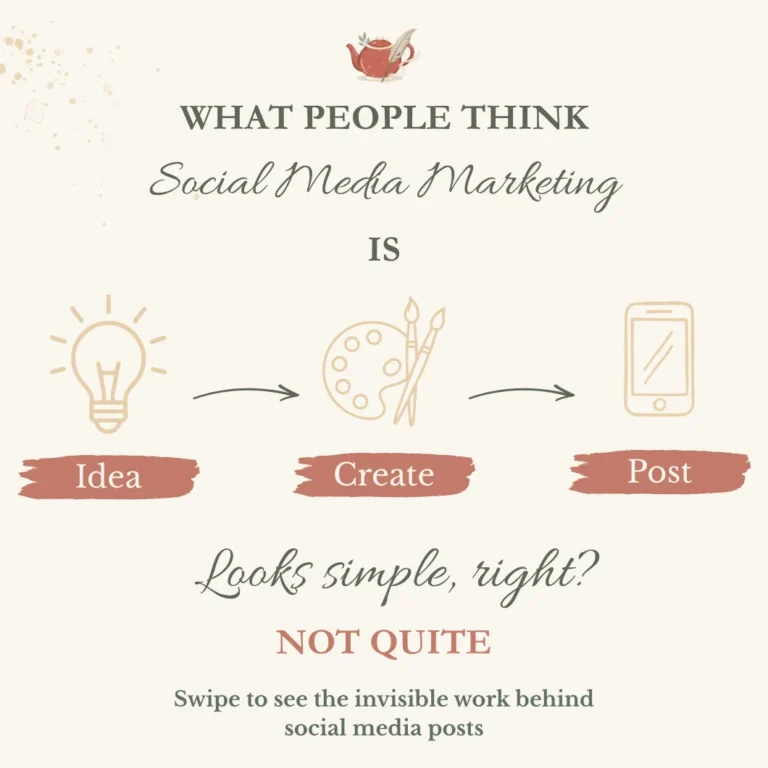
Many people assume social media looks something like this:
Idea → Create Post → Publish
The reality is usually far more complicated.
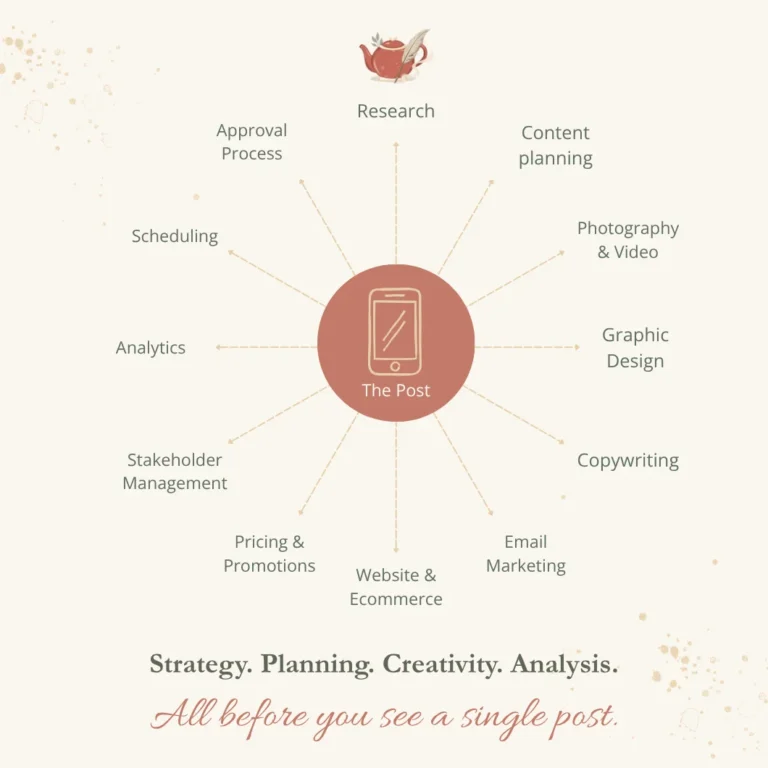
One single post or campaign can involve planning, design, photography, website updates, scheduling, reporting and collaboration with multiple people before it ever reaches an audience.
In many cases, clicking "publish" is the smallest part of the process.
Before content is created, there's often a surprising amount of planning and research involved.
-That might include:
-Content planning and scheduling
-Checking for date clashes and competing campaigns
-Seasonal events and awareness days
-Industry news and trends
-Competitor research
-Campaign planning
-Website updates
-Promotional pricing checks
-Product launches and uploads
-Defining campaign objectives
For example, if a business is launching a promotion, it's not enough to simply create a social media graphic.
Does the website reflect the promotional pricing?
Have products been uploaded correctly?
Do supporting emails need creating?
Are website banners ready to go?
Will the campaign be supported across multiple channels?
Good content rarely happens by accident. Even the fun posts usually have a lot more planning behind them than people realise.
This is the stage most people think of when they imagine social media marketing. But even here, it's rarely as simple as dropping some text into a template and calling it a day.
Social media marketers often need to consider:
Brand Consistency: Does the content reflect the brand's tone of voice?Does it feel consistent with everything else being published?
Graphic Design: Does the layout read clearly? Do the colours work together? Do the visuals support the message?
Photography & Video: Good imagery makes a huge difference, but you rarely get the perfect photo or video first time. Editing, cropping, retouching and formatting all take time.
Platform Optimisation: The same content often needs adapting for different platforms. What works on LinkedIn may need a completely different format for Instagram or Facebook.
Wider Campaign Integration: Is this a standalone post? Or is it part of a larger campaign involving email marketing, website content, blogs and multiple social posts?
It's rarely a case of "make it look pretty and move on."
This is the invisible work many people don't realise exists.
Depending on the campaign, this could include:
-Website updates
-Product uploads
-Pricing changes
-Supplier coordination
-Landing pages
-Email marketing
-Internal communication
-Approval processes
-Analytics
-SEO optimisation
-Reporting
For larger campaigns, social media is often only one piece of a much bigger puzzle. The post is simply the visible part.